
Y-LASER Successfully Delivered Yb+MPC Femtosecond Laser System
In the field of ultrafast laser systems, Ti:sapphire femtosecond lasers have long been regarded as the standard solution for achieving millijoule-level energy and sub-40 fs pulse widths. However, with the continuous advancement of laser technology, an increasing number of novel solutions have emerged, offering performance comparable to—and in some aspects even surpassing—traditional Ti:sapphire systems. Among these, the configuration of Yb-doped femtosecond lasers combined with multi-pass cavity pulse compressors (MPC) is becoming a more efficient, cost-effective, and compact alternative.
Based on this advantage, a research institute in Nanjing ultimately selected Y-LASER to provide a high-power, high-energy, ultrashort-pulse laser system for studies related to high-order harmonic generation and aerodynamics. The system has been successfully delivered and is performing well.
Why Yb + MPC is Becoming a Breakthrough Choice?
The Yb+MPC system offers significant advantages such as a compact structure, high average power, and strong system integration, making it an ideal alternative to Ti:sapphire femtosecond laser systems.
1.Compact Structure and High Average Power
Compared to Ti:sapphire systems, Yb femtosecond lasers feature a more compact structure. Not only are the lasers smaller in size, but they also deliver higher average power output within the same power range, offering significant advantages in terms of space utilization and integration. This is particularly critical for our laboratory—achieving efficient laser output and system integration within limited space was a key factor in our decision to choose the Yb laser.
2.High System Integration
Compared to traditional Ti:sapphire femtosecond systems, Yb femtosecond laser systems offer higher system integration. Their design reduces reliance on the large optical pumping equipment and water cooling systems required by conventional Ti:sapphire lasers, making the overall system not only more efficient but also easier to maintain. When combined with a high-performance multi-pass cavity (MPC) pulse compressor, the Yb femtosecond laser achieves excellent pulse compression within an extremely compact volume, meeting the demands of various cutting-edge scientific research and industrial applications.
3.Performance Enhancement with MPC Pulse Compressor
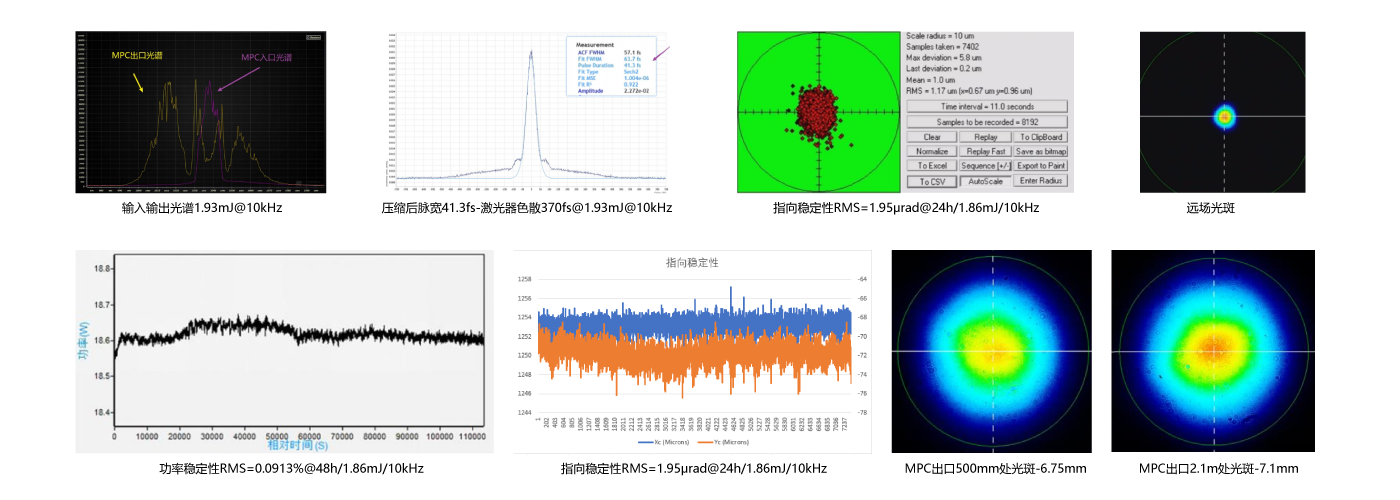
The combination of the multi-pass cavity pulse compressor (MPC) with the Yb laser system enhances the overall pulse compression performance. In practical applications, by using the 2mJ high-energy femtosecond solid-state laser together with the MPC pulse compressor, we achieved a pulse width of less than 40 fs with excellent output beam quality, ensuring the system's stability and reliability in high-precision applications.
4.Stability and Consistency
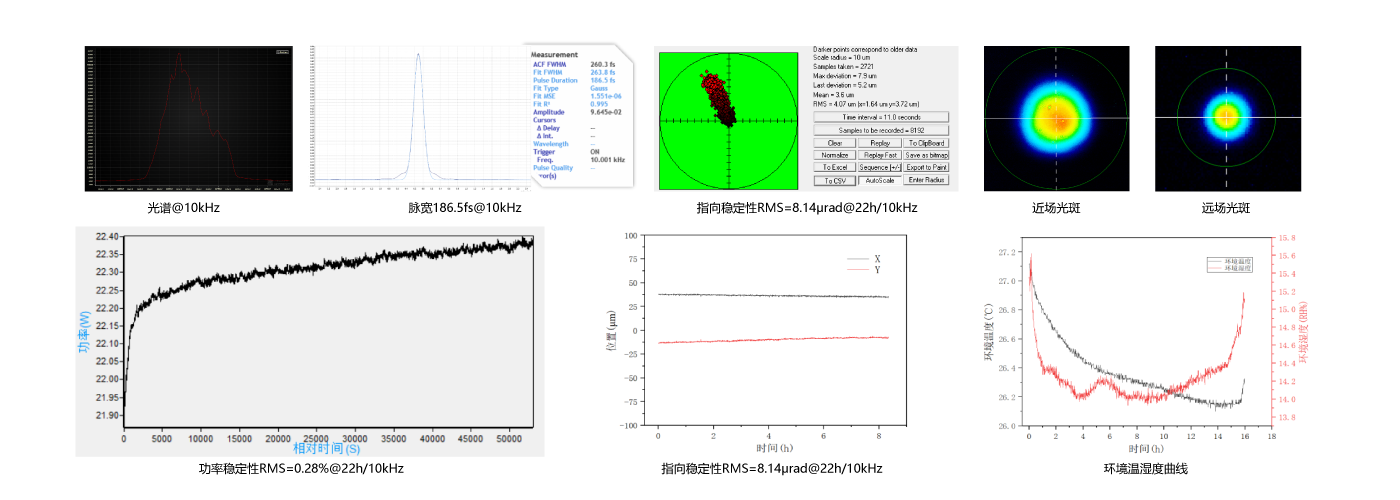
When selecting a femtosecond laser system, stability and consistency are among the core factors we consider. Using the provided 2mJ high-energy femtosecond solid-state laser, we experienced excellent long-term stability and consistency. After prolonged operation, the system maintained stable output, with all performance indicators—such as pulse energy, pulse width, and beam quality—remaining within expected ranges. The integration of the MPC pulse compressor further ensured the system's stability and efficient output under varying operating conditions.
 |  |
|---|
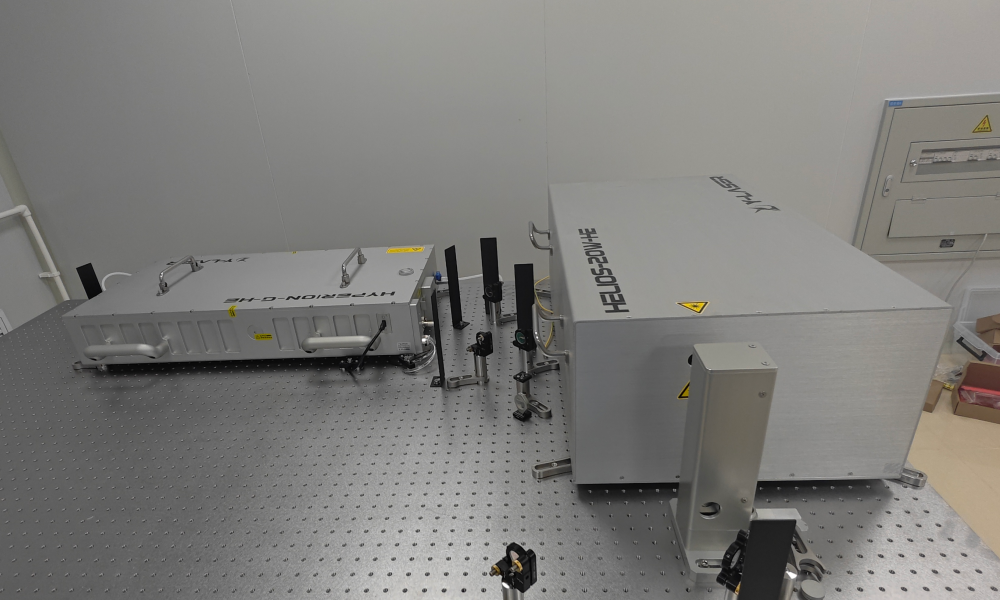
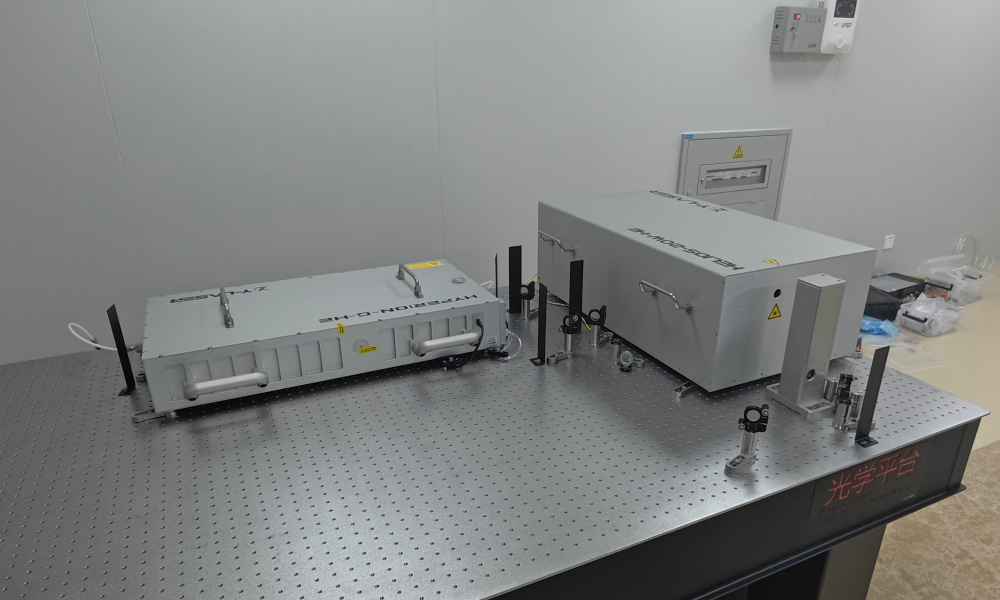
Y-LASER Successfully Delivered Yb+MPC System
The system consists of the HELIOS-20W-HE Yb laser and the HYPERION-G-HE MPC pulse compressor, combining a high-power, high-stability femtosecond laser with an efficient pulse compressor to deliver extremely short pulse widths, meeting the high-precision requirements of scientific research and industrial applications.

The HELIOS series femtosecond laser features a maximum output power of 20W, a maximum single pulse energy of 2mJ (customizable up to 3mJ), and a minimum pulse duration of 190fs, with an adjustable pulse width ranging from 190fs to 10ps. Its high stability and precise output characteristics make this laser excel in the ultrafast laser field. Equipped with horizontal or vertical polarization at a center wavelength of 1030nm, the laser delivers a beam quality of M² < 1.2 and a beam diameter of 5±1mm, ensuring precise focusing and stable output. The system supports pulse selection with adjustable range from single-shot to 200kHz (customizable up to 1MHz), and achieves pulse energy stability of <1% RMS @8h and long-term power stability of <0.5% RMS @24h, making it ideal for high-precision experiments and industrial applications.

The HYPERION-G-HE pulse compressor is designed to perfectly match the HELIOS-20W-HE laser, capable of compressing input pulse widths from 150fs-1ps to <40fs. With a high compression efficiency of >90% and a typical compression factor of 5-10 times, it achieves extremely short pulse output, meeting the demands for ultrashort pulses and high-energy transmission. This compressor is compatible with high-power laser systems such as HCF setups, enabling few-cycle pulse output and supporting a broader range of applications, including ultrafast imaging and spectroscopy. The exceptional performance of the system in compression efficiency and output pulse width ensures that users can achieve pulse compression with high precision and stability.
System Advantages:
· High Power and Short Pulse Output: The combination of the HELIOS-20W-HE laser and HYPERION-G-HE MPC pulse compressor delivers single pulse energy up to 2mJ with pulse width <50fs, meeting the demands for ultrashort pulses and high energy.
· Efficient Pulse Compression: Through the MPC pulse compressor, the system effectively compresses the pulse width with compression efficiency exceeding 90%, ensuring excellent system performance and high-energy transmission.
· Strong System Integration: The system seamlessly integrates with optical parametric amplifier and harmonic output options, accommodating diverse scientific research and industrial needs while providing flexible and versatile output options.
· Excellent Stability and Consistency: The system offers outstanding stability, with pulse energy stability of <1% RMS @8h and long-term power stability of <0.5% RMS @24h, ensuring reliable long-term high-performance operation.