
Y-Laser Successfully Delivers Tunable Femtosecond Laser System for TA System
Principle of TA Technology
The core of a TA system lies in using ultrashort pulsed lasers as the pump light to excite the sample from a steady state to a high-energy state. With timescales typically on the order of femtoseconds (10⁻¹⁵ seconds), these ultrashort pulses can instantaneously trigger dynamic processes in the matter, resulting in a non-equilibrium particle distribution. For instance, a Ti:sapphire femtosecond laser (760nm-840nm), with its broad wavelength tunability and high energy output, can meet the excitation requirements of various samples, enabling precise, targeted excitation of specific molecular bonds. However, to achieve a broader wavelength range and greater tuning flexibility, an Optical Parametric Amplifier (OPA) is required.
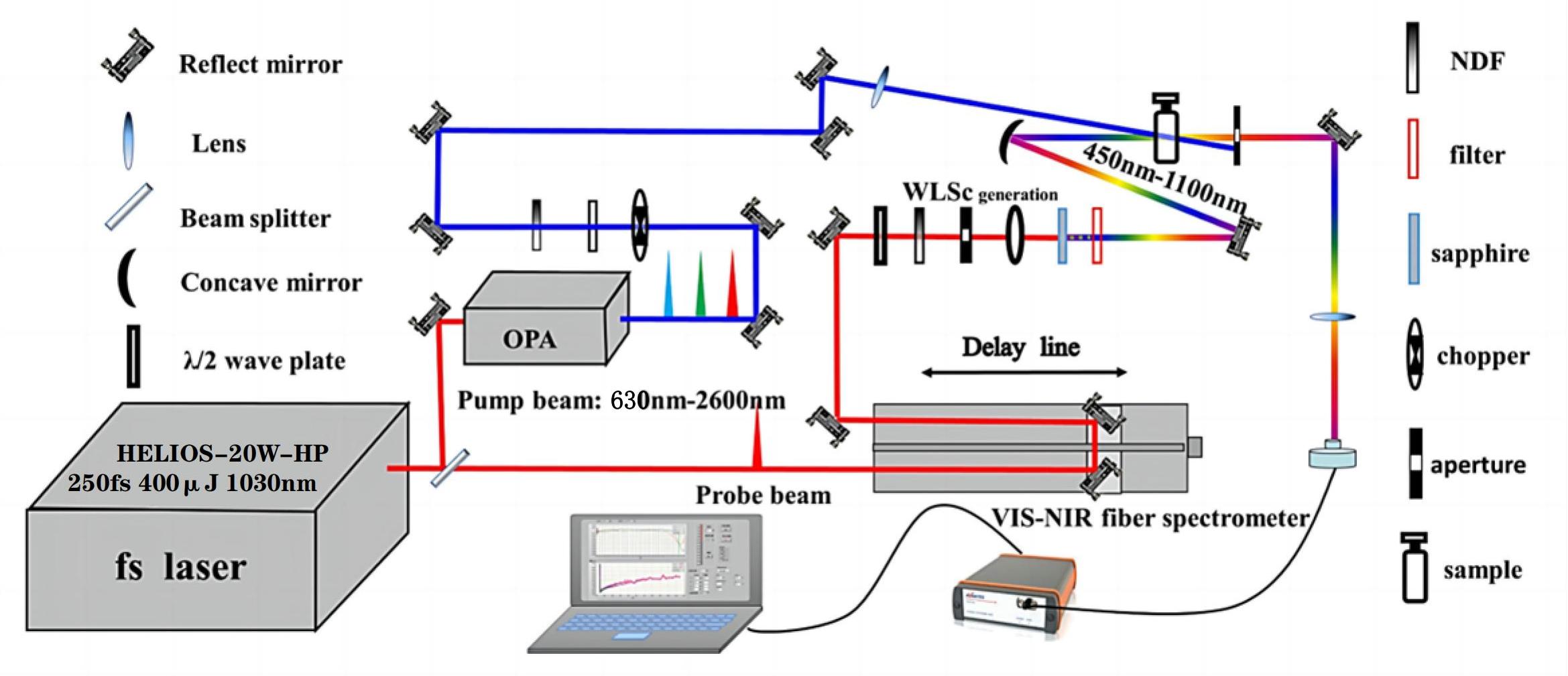
In the optical path diagram, the pump light is provided by an ultrafast laser (such as the HELIOS-20W-HP femtosecond laser shown in the figure), which outputs femtosecond laser pulses with a wavelength of 1030 nm and a pulse duration of 250 fs.
· The laser beam is split into two paths by a beam splitter. One path enters an optical parametric amplifier (OPA) to generate tunable pump light with a wavelength range of 630 nm to 2600 nm. This portion of the pump light is used to excite the sample.
· A half-wave plate (λ/2 wave plate) is used to adjust the polarization direction of the pump light, ensuring optimal interaction between the light and the sample.
The sample signal detection process is as follows:
The probe light is generated by passing the other separated portion of the laser through a broadband white light source (WLS) generator. After exciting the sample, the broadband probe light, which immediately follows the pump light, passes through the sample. At this point, due to changes in the sample’s excited state absorption characteristics, the system records the resulting transient absorption spectral signals. These signals act as snapshots of the “light-matter interaction,” providing a clear perspective for understanding dynamic changes.
· In the diagram, the WLS generator contains nonlinear optical elements such as a sapphire crystal. Through the nonlinear interaction of the pulsed laser with the sapphire, broadband probe light spanning from 450 nm to 1100 nm is generated.
The key component for temporal synchronization between the pump light and the probe light is the delay line, which precisely controls the time difference between the arrival of the pump and probe pulses at the sample. Using a high-precision optical delay line, the time delay is adjusted by varying the optical path length, thereby changing the time interval between the pump and probe pulses. By progressively extending the delay from the picosecond to the millisecond range, the system can continuously record spectral changes at different moments, thereby mapping the sample’s evolution throughout the entire dynamic process.
The pump light irradiates the sample, exciting the sample molecules from the ground state to an excited state, while the probe light passes through the sample shortly thereafter.
· In the sample region, the excited sample exhibits a different absorption response to the probe light, causing a change in the spectral characteristics of the probe light.
Signal Acquisition and Data Analysis Logic
After passing through the sample, the probe light enters a fiber-coupled VIS-NIR spectrometer. The spectrometer records the spectral changes of the probe light at different time delays and transmits the data to a computer for subsequent analysis.
TA data analysis is based on the Beer-Lambert law. The acquired data is processed to obtain time-evolving transient absorption spectra. By further analyzing the dynamic parameters of the sample, specifically the amplitude changes of the absorption signal, kinetic parameters such as the concentration and lifetime of excited state species can be derived. In complex systems, using spectral fitting and kinetic models, scientists can deconvolve the specific chemical processes behind overlapping signals and identify key reaction pathways, such as parallel or sequential reactions.
Transient absorption spectroscopy (TA), with its exceptionally high time resolution covering a broad temporal range from picoseconds to milliseconds, can precisely capture transient changes in photophysical and photochemical processes, such as dynamic behaviors like electron-hole pair separation and recombination. Simultaneously, TA technology not only records changes in absorption intensity but also resolves complex spectral information, including shifts in absorption peak positions and broadening of peak shapes, providing comprehensive data support for studying the kinetic characteristics of excited states of matter. Furthermore, TA employs a non-contact interaction method between light and the sample, making the entire process gentle and non-destructive, particularly suitable for dynamic studies of precious samples and biological living tissues. With these unique advantages, TA has become an essential tool in scientific research for exploring ultrafast dynamic processes and light-matter interactions.
Y-LASER successfully delivered a tunable femtosecond laser system for the TA system
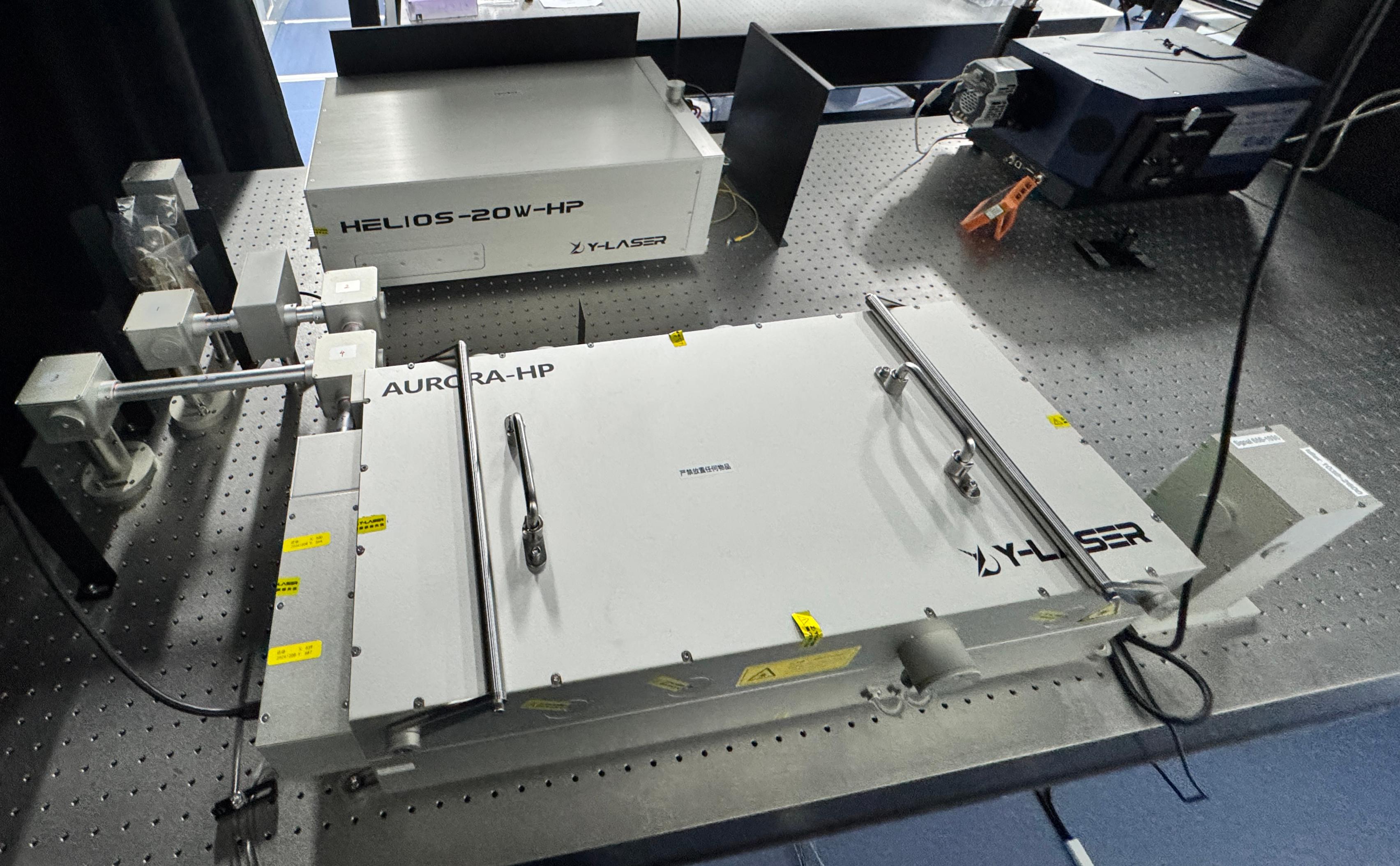
This delivery includes the HELIOS+AURORA tunable femtosecond laser system for TA
The core of transient absorption spectroscopy (TA) lies in the selection and performance of the light source, which directly determines the experiment’s temporal resolution, spectral range, and data quality. A TA system typically consists of two parts: a pump laser and a broadband probe light source, each meticulously designed and optimized to meet high-performance requirements.
As shown in the optical path diagram, the HELIOS-20W-HP femtosecond laser provides the initial femtosecond laser pulses with a wavelength of 1030 nm and a pulse duration of 250 fs. In the diagram, the broadband probe light source is generated by splitting the beam from the HELIOS-20W-HP femtosecond laser. The WLS generator within it contains nonlinear optical elements such as a sapphire crystal. Through the nonlinear interaction of the pulsed laser with the sapphire, a broadband probe light spanning from 450 nm to 1100 nm is generated, while retaining the characteristics of the incident pulsed laser, such as pulse duration and repetition rate.
 |  |
|---|---|
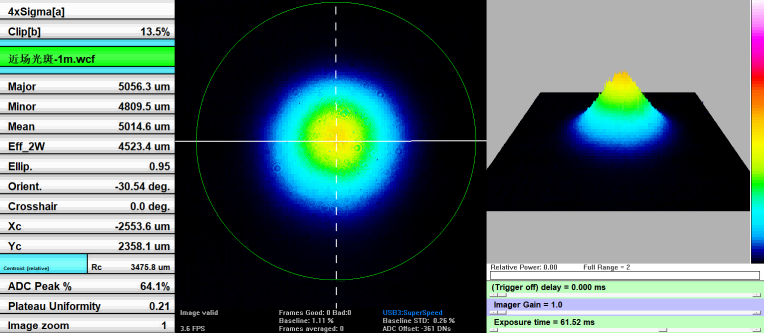
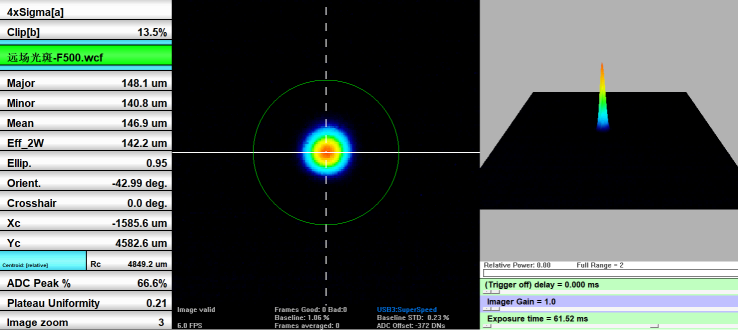
Near-field spot of the HELIOS-20W-HP (50kHz/400μJ) | Far-field spot of the HELIOS-20W-HP (50kHz/400μJ) |
 |  |
|---|---|
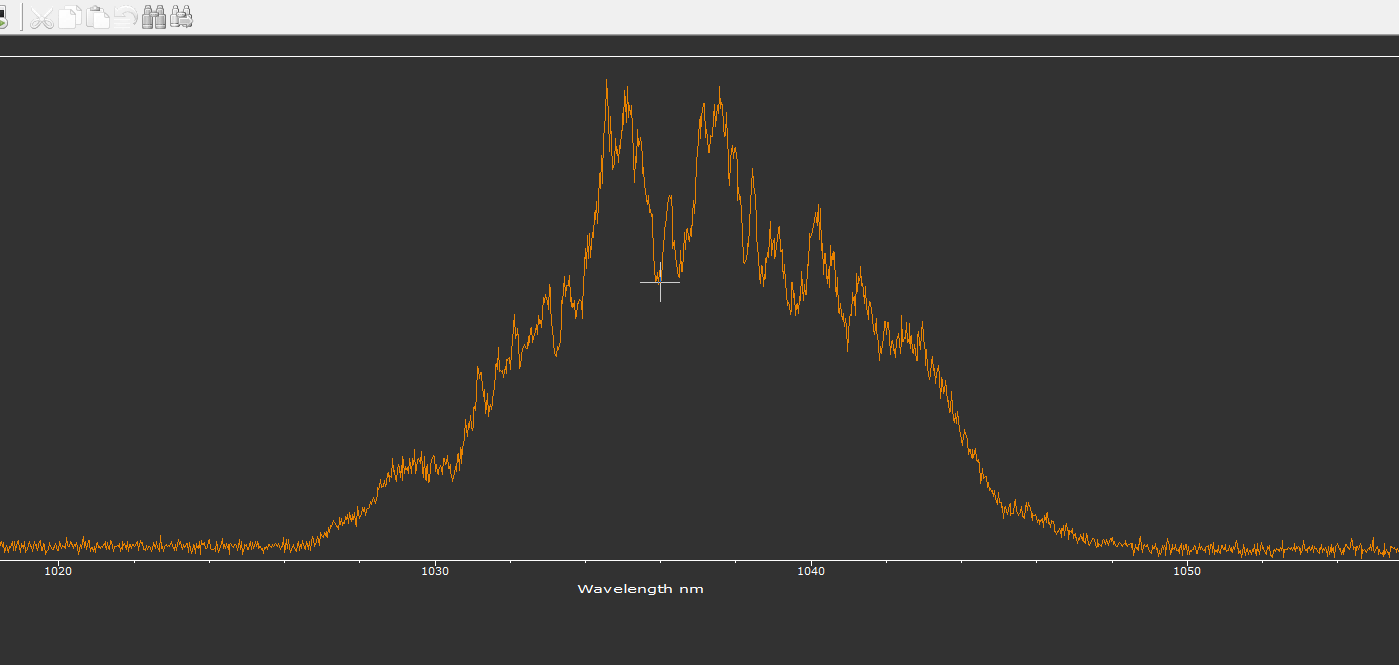
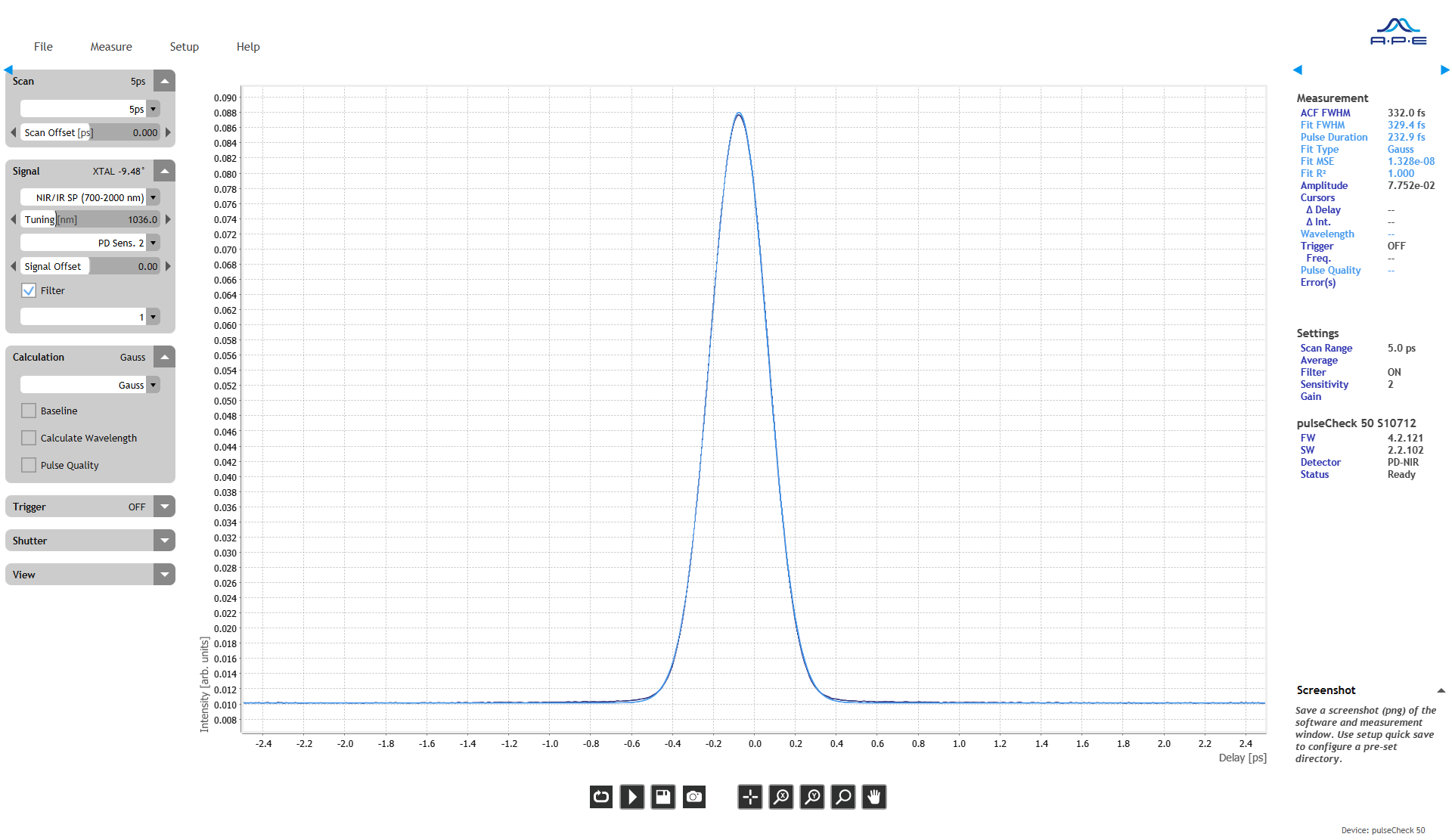
Spectral curve of the HELIOS-20W-HP (50kHz/400μJ), with a center wavelength of 1036 nm | HELIOS-20W-HP (50kHz/400μJ) factory pulse width test, pulse width = 232.9 fs |
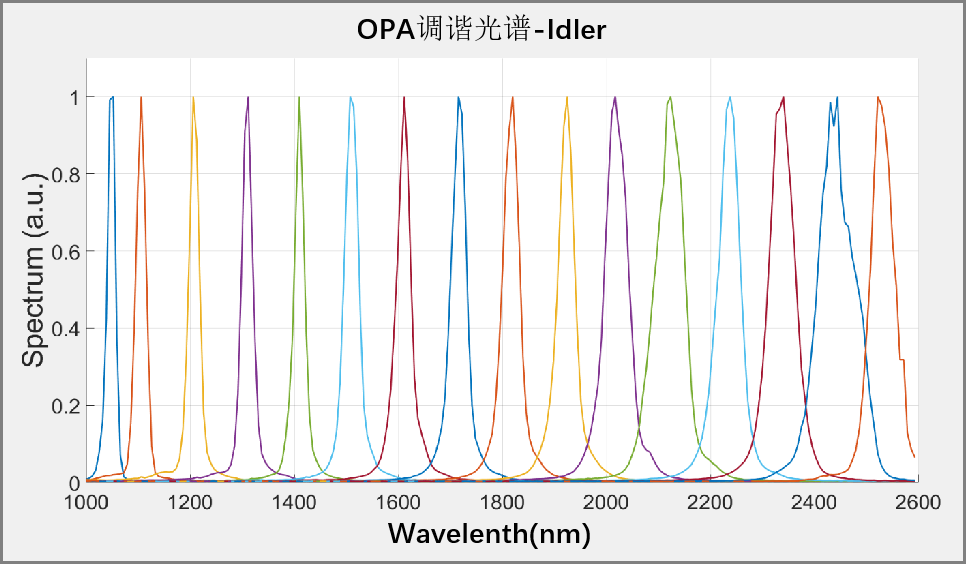
After the laser is split into two paths by a beam splitter, one path generates broadband probe light spanning from 450 nm to 1100 nm, while the other path enters an optical parametric amplifier (OPA) to produce tunable pump light with a wavelength range of 630 nm to 2600 nm. This portion of the pump light is used to excite the sample. The broad wavelength coverage of both the pump and probe lights meets the excitation and detection requirements of diverse samples.

 |  |
|---|---|
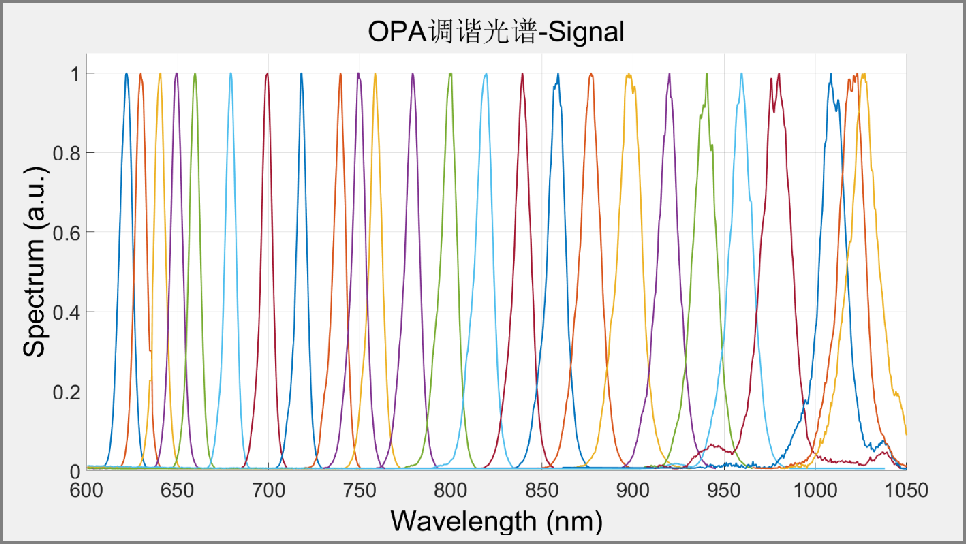
Spectrum of the signal light output from the OPA (AURORA-HP) pumped by the HELIOS-20W-HP (50kHz/400μJ) | Spectrum of the idler light output from the OPA (AURORA-HP) pumped by the HELIOS-20W-HP (50kHz/400μJ) |
 |  |
|---|---|
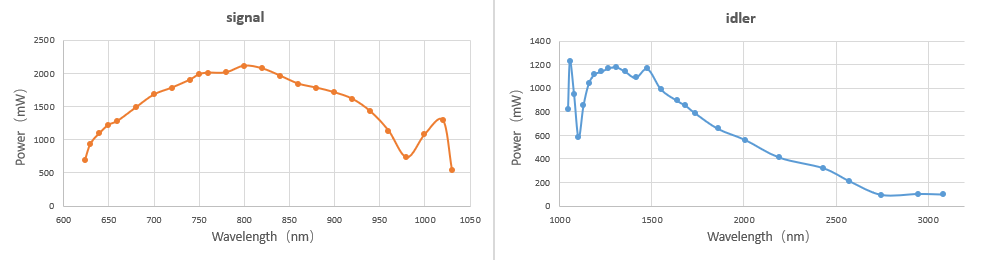
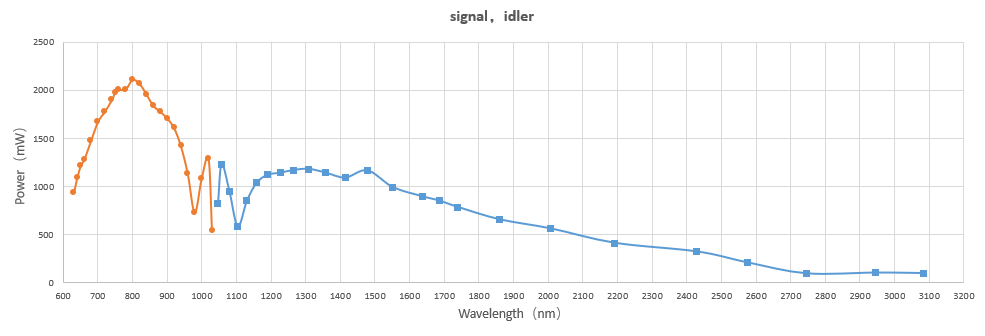
OPA tuning power curve pumped by 90% input (19W) of HELIOS-20W-HP (50kHz/400μJ) |
 |  |
|---|---|
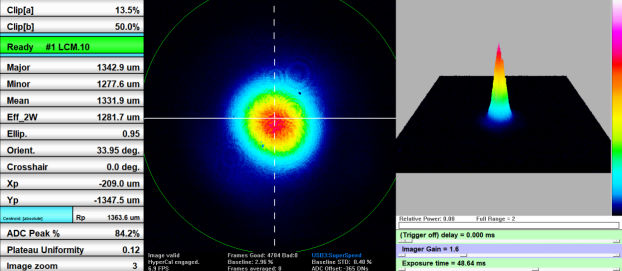
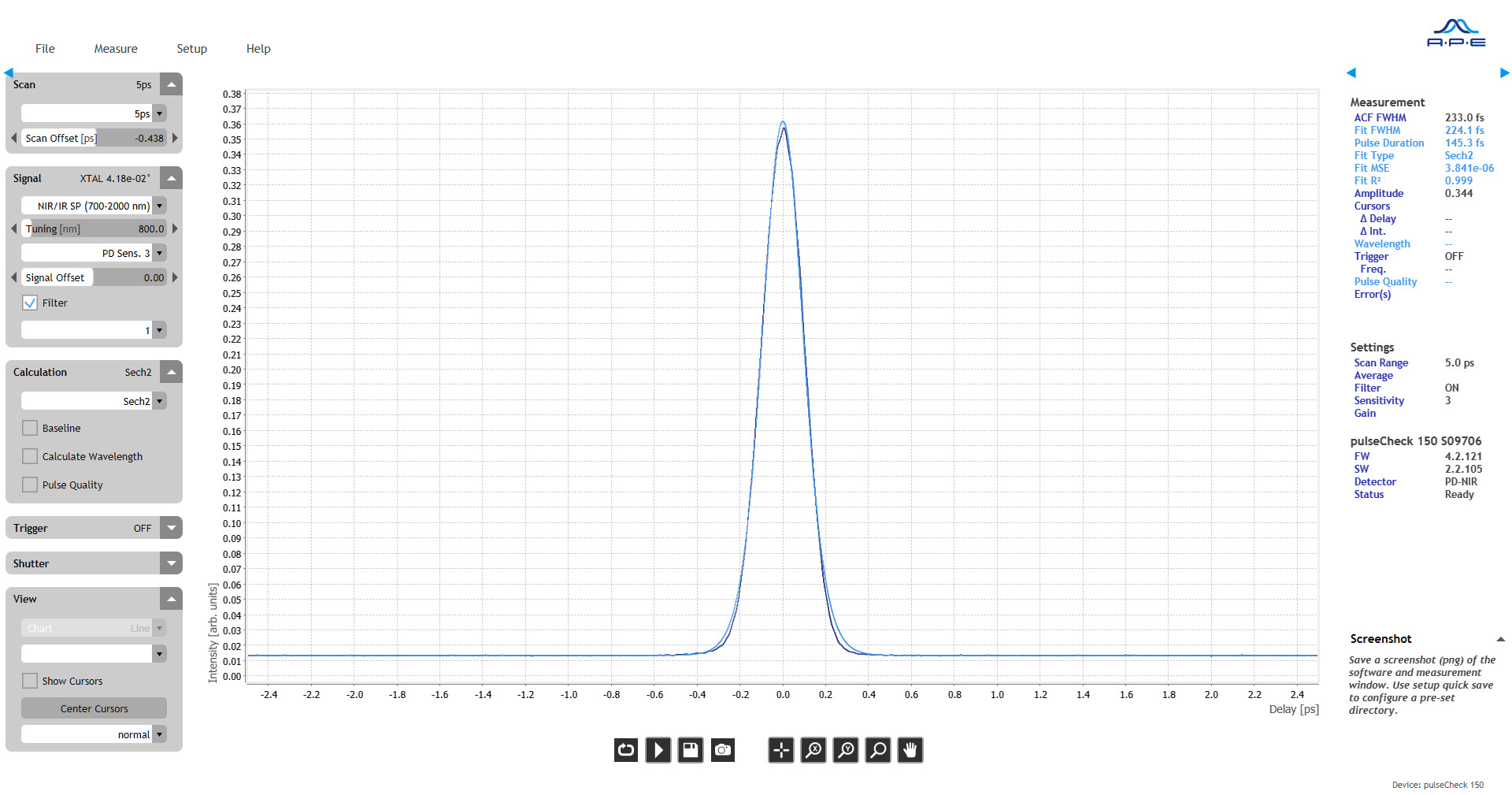
OPA output spot pumped by HELIOS-20W-HP (50kHz/400μJ) - 50kHz, 1m from OPA exit @800nm, spot reflected from the front surface of the wedge, D1.3mm | OPA output pulse width pumped by HELIOS-20W-HP (50kHz/400μJ) @800nm - 145.3 fs |
 | |
|---|---|
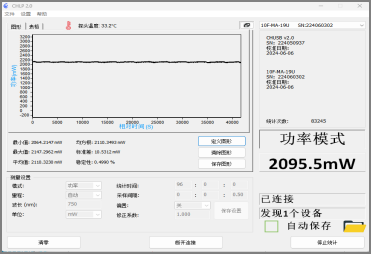
OPA output power stability pumped by HELIOS-20W-HP (50kHz/400μJ) @13.5h, RMS=0.4990% @750nm |
The HELIOS-20W-HP laser, combined with an optical parametric amplifier (OPA), provides an ultra-wide wavelength tuning range from 650 nm to 2600 nm, covering the ultraviolet, visible, near-infrared, and mid-infrared bands to meet the needs of multidisciplinary research. The system delivers high-power output in key spectral regions (700 nm - 950 nm and 1300 nm - 1900 nm), with a peak signal power of 2200 mW and a peak idler power of 1400 mW. Additionally, it features excellent power stability and pulse width, consistently providing temporal resolution on the order of hundreds of femtoseconds, offering reliable support for long-duration experiments.