Terahertz Generation
Terahertz generation refers to the production of electromagnetic radiation in the 0.1–10 THz frequency range, typically achieved through nonlinear optical processes such as optical rectification or photoconductive emission. It has become a powerful tool in time-resolved spectroscopy, non-destructive inspection, and ultra-broadband communication.
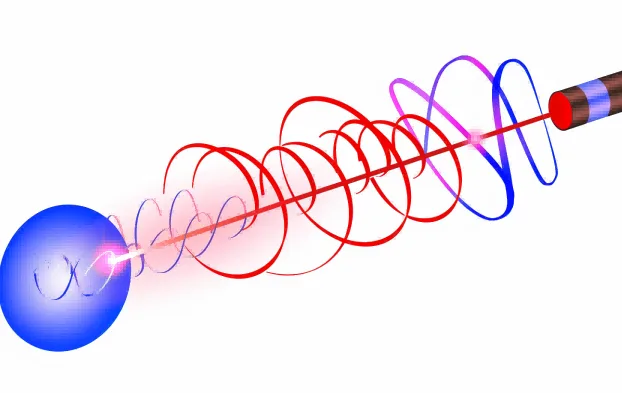
Terahertz waves are an electromagnetic spectrum located between microwaves and infrared light, with wavelengths between 0.1 mm and 1 mm. This electromagnetic wave has unique penetrating properties and relatively low photon energy, giving it unique application value in many fields. These characteristics give terahertz waves important application potential in non-destructive testing, high-resolution imaging, and material characterization.
Femtosecond lasers can produce extremely short pulses that, when interacting with specific materials (such as photoconductors and semiconductors), can effectively generate terahertz waves. In addition, femtosecond lasers can also be used to detect terahertz waves, the principle being to obtain information by analyzing the results of the interaction between femtosecond laser pulses and terahertz waves. The high efficiency of femtosecond lasers in generating and detecting terahertz waves provides greater flexibility and higher precision for terahertz applications.
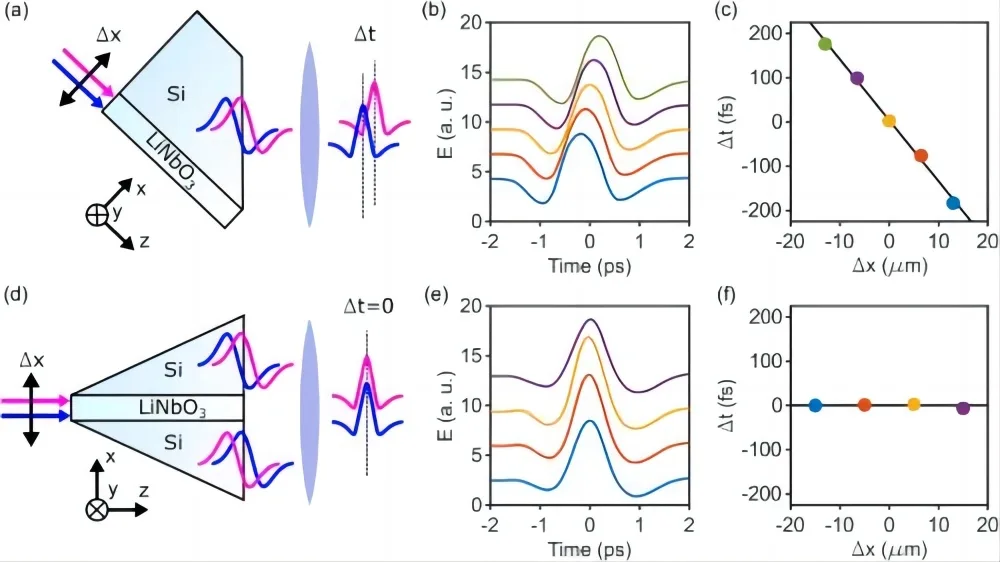
Figure 1: Passive compensation of terahertz timing jitter.
In the non-destructive testing of packaging materials and clothing, the application of terahertz waves is especially prominent. Because of their excellent penetration capability, terahertz waves can detect objects that are packaged or hidden, such as detecting weapons or contraband hidden under clothing in security checks. This capability makes terahertz waves an effective security detection tool.
In biomedicine, terahertz waves likewise play an important role. They are used for high-resolution imaging of biological tissue, such as early detection of tumors. Because of the high sensitivity of terahertz waves to water molecules, they can effectively distinguish subtle differences in soft tissue, which is significant for the early diagnosis and treatment of disease.
The use of femtosecond lasers significantly improves the generation and detection efficiency of terahertz waves. The high peak power and extremely short pulse width of femtosecond laser pulses enable them to effectively excite terahertz waves and precisely measure their characteristics. With technological development, the application of femtosecond lasers in terahertz technology is continually driving the field in new directions. In communication technology, the application of terahertz waves may lead to higher-rate wireless data transmission.
In summary, the unique physical properties of terahertz waves, combined with the high efficiency of femtosecond lasers in generating and detecting terahertz waves, give them broad application prospects in security detection, biomedical imaging, communication technology, and more.