Selective Ablation
Selective ablation refers to the precise removal of material from targeted regions without affecting the surrounding areas, achievable in ultrafast laser processing through fine energy control, wavelength selection, or multi-photon absorption. This capability is crucial for functional layer removal, precision patterning, and tissue microsurgery.
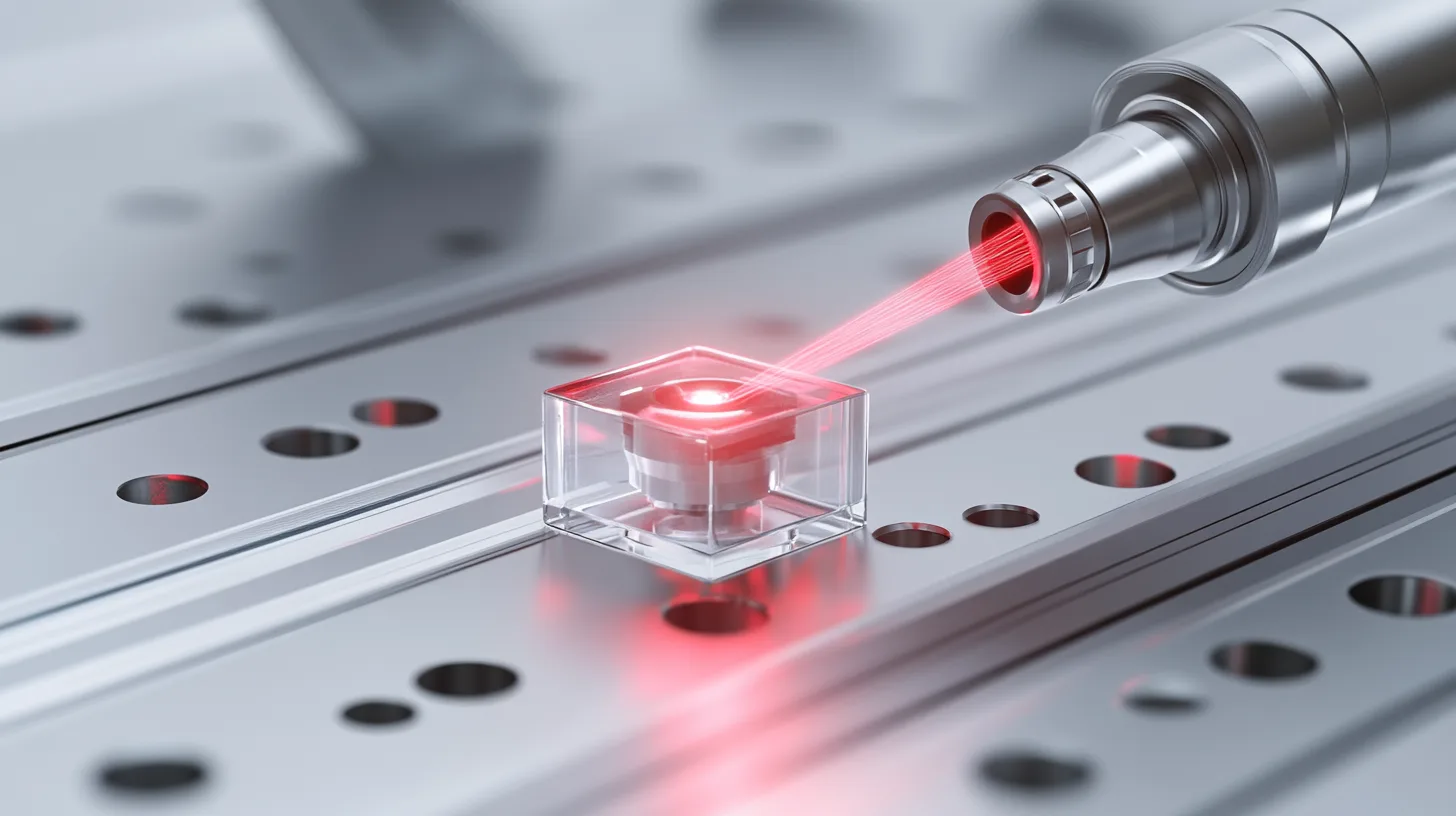
As an advanced laser-processing technology, selective ablation demonstrates unique application value and technical advantages across many fields. This technology precisely removes specific regions of a material’s surface using a laser, achieving fine machining of the target area. In selective ablation, the laser–material interaction is crucial: the laser energy is absorbed by the material in the target region, causing it to rapidly heat and evaporate or decompose. The ability to precisely control the laser’s position, energy, and duration enables precise machining while minimizing damage to surrounding material.
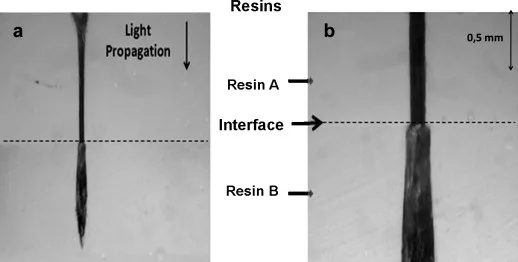
Figure 2: Micrograph of the ablation profile of a sample at the resin A / resin B interface.
In the semiconductor industry, selective ablation is especially important. It is used for micro-etching of chips, particularly for fabricating fine circuit patterns. This technology is crucial for improving chip performance and density, as it allows more precise definition of the dimensions and shapes of circuit elements, achieving higher integration and better electrical performance.
In medicine, selective ablation likewise plays an important role. In laser retinal surgery and laser dental treatment, it is used to precisely remove damaged or diseased tissue. Compared with traditional surgical methods, selective ablation can more precisely locate and treat the target area, reducing damage to healthy tissue and improving surgical precision and safety.
In materials science, selective ablation also shows unique advantages in sample preparation and characterization. It is used to precisely cut and shape material samples for more in-depth chemical composition and physical structure analysis. This technology is crucial for understanding the fundamental properties of materials and developing new materials.
In MEMS manufacturing, selective ablation is likewise crucial. This technology is used to create miniature mechanical and electronic components; its high-precision machining capability is crucial for manufacturing miniaturized devices and improving their performance. By precisely controlling the laser beam, complex microstructures and components can be fabricated.
In cultural-heritage protection and art restoration, selective ablation also demonstrates unique application value. It can be used to clean and restore contaminants on the surface of ancient relics while protecting the original material. This method provides a non-invasive, high-precision means of cleaning and restoration.
In all these applications, femtosecond lasers play a vital role in selective ablation. The extremely short pulse duration of the femtosecond laser provides very precise material-processing capability, minimizing the heat-affected zone and preventing damage to surrounding material. This extreme precision and control make femtosecond lasers an ideal choice for performing high-precision, fine machining. The high peak power and precise pulse control of the femtosecond laser make it excel at processing various materials, whether hard materials (such as metals and ceramics) or sensitive materials (such as biological tissue and polymers).
In summary, selective ablation — especially combined with femtosecond laser technology — has brought revolutionary progress to many fields. From semiconductor manufacturing to medical surgery and cultural-heritage protection, this technology demonstrates powerful capabilities in precision machining and precise control, opening new possibilities for future technological development and innovation.