Ultrafast Spectroscopy
Ultrafast spectroscopy is an experimental technique that uses ultrashort laser pulses to study how matter responds to photoexcitation on timescales as short as femtoseconds (10⁻¹⁵ s) or even attoseconds (10⁻¹⁸ s). In the 1980s, with the successful development of femtosecond lasers, Ahmed Zewail and his colleagues achieved the first real-time observation of chemical reactions with femtosecond time resolution, marking the birth of modern ultrafast spectroscopy. This technique is primarily employed to explore ultrafast dynamic processes such as electronic transitions, lattice vibrations, and energy transfer in molecules and atoms, and has important applications across a wide range of interdisciplinary frontiers, including physics, chemistry, materials science, and biology.
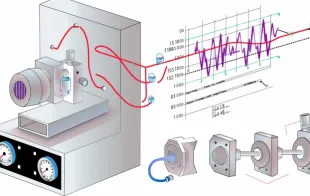
Transient Absorption Spectroscopy
Transient absorption spectroscopy is a pump-probe technique that measures time-resolved changes in the absorption spectrum of a sample following photoexcitation, providing direct insight into excited-state dynamics and relaxation pathways.
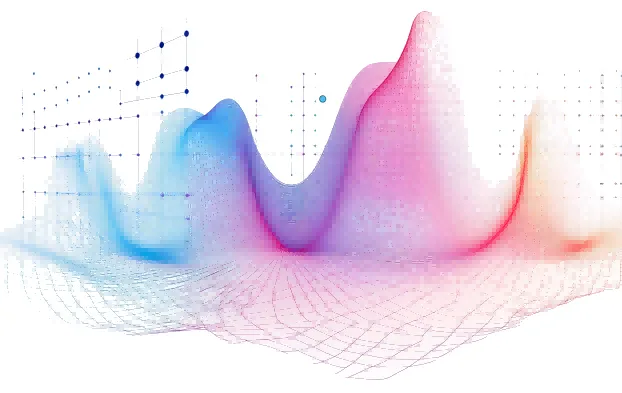
Two-Dimensional Infrared Spectroscopy
Two-dimensional infrared (2D-IR) spectroscopy is a nonlinear technique that spreads the vibrational response of molecules across two frequency dimensions, revealing couplings between vibrational modes and their dynamic evolution on ultrafast timescales.
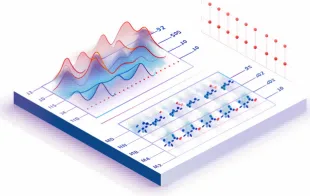
Two-Dimensional Electronic Spectroscopy
Two-dimensional electronic spectroscopy (2DES) extends the 2D-IR concept to electronic transitions, using femtosecond pulse sequences to map the excitation–emission correlation and detect energy transfer, exciton dynamics, and quantum coherence in complex systems.
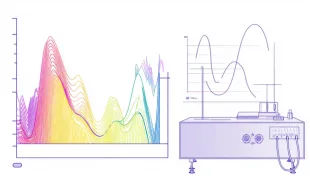
Femtosecond Stimulated Raman Spectroscopy
A time-resolved vibrational spectroscopy technique that uses a femtosecond pump pulse to initiate dynamics and a narrowband Raman probe to detect vibrational coherence with high temporal and spectral resolution.
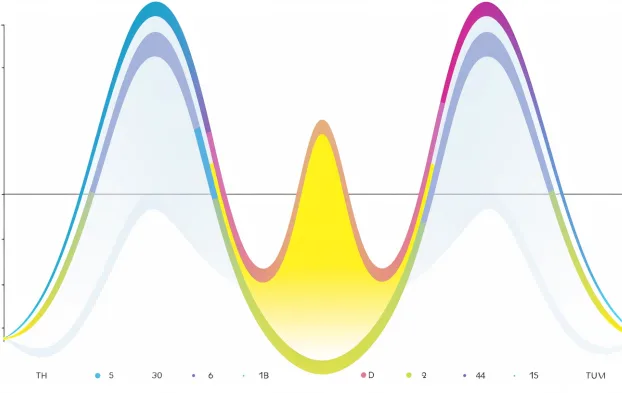
Time-Resolved Fluorescence Spectroscopy
A technique that measures the time-dependent decay of fluorescence emission after pulsed excitation, providing direct access to excited-state lifetimes, energy transfer, and solvent relaxation dynamics.
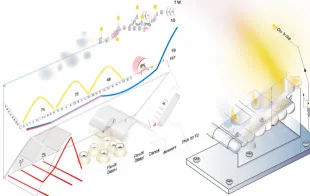
Flash Photolysis
A classical technique invented by Norrish and Porter in which a high-intensity light pulse initiates photochemical reactions, followed by a delayed probe pulse to monitor transient intermediates and reaction kinetics.
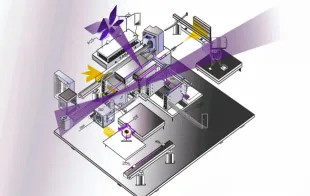
Sum-Frequency Generation Spectroscopy
A surface-specific vibrational spectroscopy technique that uses the nonlinear mixing of visible and infrared pulses to probe molecular orientation and structure at interfaces with submonolayer sensitivity.
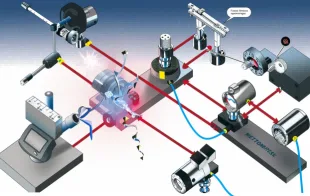
Transient Grating Spectroscopy
A four-wave mixing technique in which two pump pulses create an interference grating in the sample, and a probe beam diffracts from this grating to monitor ultrafast dynamics such as carrier diffusion, acoustic phonon propagation, and energy transfer.